Women in Solidarity for Energy: Pan-European Workshop Series in Brussels,  9/6/2026

By | Actions | No Comments

Women in Solidarity for Energy – WISE, Pan-European Workshop Series in Brussels on Tuesday, 9 June 2026, during EU Sustainable Energy Week

Solidarity: Collective action by diverse individuals and/or entities to overcome energy-related poverty as experienced by one or more parties“. 
Available data (while sparse) suggest that, across the EU, rates of energy poverty are 3 to 4 times higher among households in which women alone manage resources – including energy. Often, this reflects how current economic and social systems fail to acknowledge or take account of their unique needs.

Against an EU average of 8-10% of households being in situations of energy vulnerability, among single women, the rates skyrocket. Estimates suggest that 31% of all single women cannot afford to keep their homes adequately comfortable or fall behind on paying energy bills. Narrow the focus to single mothers and the share jumps to 44%.

When using the term ‘single women’, WISE recognises that it is less than ideal to capture ‘who’ these women are. They might be one of the following:

Εnergy poverty in Greece

According to recent statistics, 19.2% of the Greek population reported being unable to keep their homes warm in winter and 12.4% face energy vulnerability. Not yet reflected in such data are the large numbers of people who cannot adequately cool their homes in hotter and longer summers. Most buildings lack proper insulation (79% in Athens), leading to high energy bills. In parallel, low pensions — particularly of women — mean the burden of energy bills is excessive.

Being among the most southern points of Europe, Greece has seen a surge in migrants over the past two decades. More recently, a large number of refugees from Ukraine have arrived. Often, such groups have a poor command of the Greek language, low energy literacy and insufficient income to purchase energy efficient appliances. Many also live in poorly maintained buildings. As a result, rates of energy poverty among migrants are much higher than for the general population.

In 2014, the government of Greece launched the ‘I am Saving Energy at Home’ programme, providing subsidies for renovations of a number of homes. Recently, the imperative to prioritise the most vulnerable households was added.

In May 2024, the Municipality of Athens established Energy Poverty Alleviation Office, which is open for in-person meetings. Trained advisors also carry out home visits to inform citizens and carry out soft measures (e.g. installing LED light bulbs) or provide advice on more complex solutions (energy efficiency renovations). By cooperating with companies providing renovation services, the municipality has also negotiated lower costs for energy efficiency measures.

‘Solidarity’ as a central theme: What does it mean?

In line with definitions proposed by the Community Energy for Energy Solidarity project and others, WISE considers energy solidarity to encompass: “Collective action by diverse individuals and/or entities to overcome energy-related adversity as experienced by one or more parties”.

Such actions should seek to enhance social justice while also building empathy for those whose lives are already constrained by systemic injustices. It implies a sustained commitment that may involve equitably distributing costs incurred in the pursuit of a shared goal.

Taking action to empower single women

Multiple factors contribute to the systemic injustices that undermine the health and well-being of single women and of their dependents. Most are complex and addressing them will require strategic and holistic action over the long term.

Women in Solidarity for Energy (WISE) – a european project but also a network of  organisations – aims to launch an EU-wide movement to better understand and meet the energy needs of the most vulnerable citizens. WISE – Women in Solidarity for Energy – brings together partners from across Europe to explore how poor housing, energy vulnerability, gender inequality, and climate transition intersect in women’s everyday lives, and what more just, grounded, and workable responses might look like.

Across 7 countries, (Greece, Bulgaria, Italy, The Netherlands, France, Hungary, Croatia), the WISE Consortium comprises experts in technical, economic and social aspects of delivering a just, clean energy system. Several bring specific experience in tackling energy poverty and in applying a ‘gender lens’ to both policy and practical action.

A strong ability to convey the stories of ‘people and energy’ is critical to engaging others in WISE and to delivering its aims.

Among the partners of the project are 2 greek organisations, the social cooperative  Anemos Ananeosis / Wind of Renewal and  INZEB.
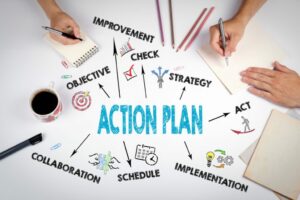
Actions for women in energy poverty, Women in Solidarity for Energy

The Project adopts energy solidarity as a core principle based on the value it can bring across three areas:

Creating Community: Many single women in energy vulnerability are also negatively affected by social isolation. Engaging local actors and citizens in tackling energy poverty can boost their psychological well-being and reduce the burden of needing to be completely self-sufficient.

Delivering ‘quick wins’: Tackling energy poverty is a complex and resource-intensive process that takes time. Small actions in the near term can reduce some of the impacts of energy poverty while also building trust between those affected and the actors who hold responsibility for eliminating social injustices.

Fostering co-creation of relevant solutions: Too often, policy makers and other actors implement actions that do not reflect what women most need. Solidarity aims to empower women in decision-making processes.

Over two years, WISE has organised events and carry out actions designed to raise awareness, build knowledge, motivate action and stimulate change. Most events are organised at local/national levels, aiming to gather insights as to the situation of the most vulnerable women in targeted areas. And, more importantly, to co-develop solutions that respond to their immediate needs.

In its first four months, WISE drew more than 250 people from ~20 EU countries to its first two activities:

a) creating WISE National Collectives to lead local action; and

b) organising a Pan-European Conference.

Two events are pan-European, fostering exchange and aiming to stimulate an energy solidarity movement. Policy makers and other actors come to understand that women who manage households on their own ARE the most vulnerable group in Europe.

Across 10 strategically planned events, WISE Partners aim to engage an ever-growing network of actors in the achievement of four overarching goals:

  • Raise awareness of the situation of single women among the general public and decision-makers.
  • Educate single women about energy in general and, more specifically, their energy rights.
  • Co-develop solutions by engaging affected women and a wider range of relevant actors.
  • Enable other groups to join the movement by making resources available in multiple languages

WISE anticipates a rapid multiplier effect as it advances collective action to make more resources available in diverse languages and then to raise awareness and deliver services to target women.
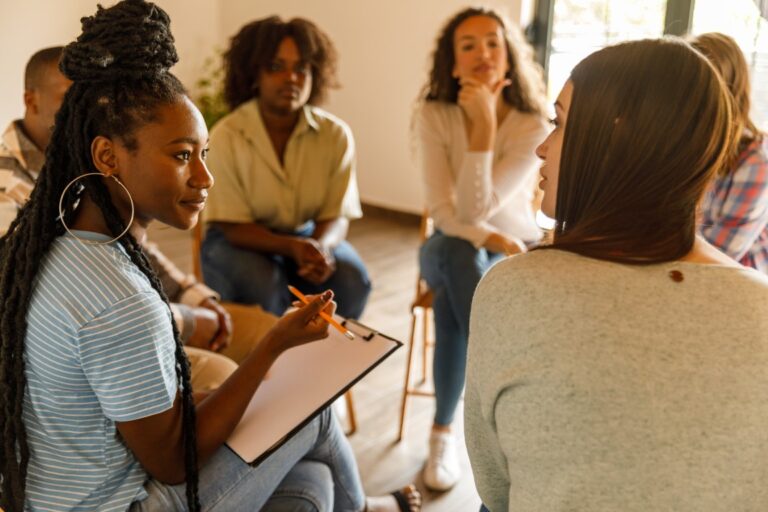
National collectives / Συλλογικότητες σε εθνικό επίπεδο

Short recaps of the initial WISE National Collective meetings in Greece, Bulgaria, Croatia, France, The Netherlands, Italy, Hungary offer an overview of contexts, current situations and aspects to consider while implementing actions. Two reports prepared by WISE will be made available for downloading once approved by the European Commission.
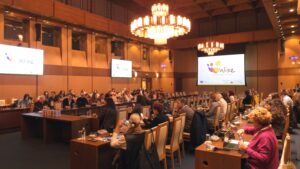
Participants at the WISE Pan-European Conference, 6 Deceber 2024, Sofia, BulgariaA pensioner in Ukraine copes with skyrocketing energy prices.A world map suggesting the wide variety of languages.

– WISE Pan-european conference

– WISE Film screenings
– Energy solidarity days
– Translate – a – thon 

WISE Pan-European Workshop Series in Brussels on Tuesday, 9 June 2026

Last year, among other activities, an energetic Pan-European online event, for the Women in Solidarity for Energy Project (WISE) was organised by the partners of this project. More than 200 women from all over Europe came together to discuss gender, energy poverty and climate transition challenges. We translated the Right to Energy for Women all over Europe in >15 European languages.

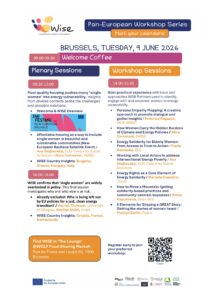
Now, the project is drawing to a close. There will be one more opportunity to meet and connect in person! We warmly invite you to join us at the WISE Pan-European Workshop Series in Brussels on Tuesday, 9 June 2026, during EU Sustainable Energy Week: WISE_WP10_Brussels_one-page flyer_FIN_2026.05.28

Our Brussels event will combine plenary discussions, country insights, and practical workshops with partners from across the consortium. Together, we will look at why so many women — especially those living alone, carrying care responsibilities, or already pushed to the margins — remain overlooked in housing, energy, and transition policy, and what can be done differently.

The programme includes:

  • a morning session as a part of the New European Bauhaus;
  • morning plenaries on housing, energy vulnerability, and country insights from across Europe;
  • afternoon workshops offering practical tools and methods drawn from WISE partner experience;
  • a final session asking who is still being left out by EU policies for a just and clean energy transition.

This is a space for activists, feminists, women’s rights advocates, housing and energy actors, environmental and climate justice organisations, social practitioners, public institutions, researchers, and cultural organisers who want to think and act across silos.


To find out how to join the WISE movement – as an individual, an organisation or a funder or in-kind contributor – explore the options under Ways to Engage.

E-LOCUM: transforming how young people understand and engage with migration

By | Actions | No Comments

The E-LOCUM project (2024–2026) was not simply a sequence of activities, but a structured journey that aimed to transform how young people understand and engage with migration. At a time when public discourse is often shaped by misinformation and polarisation, the project created spaces where young people could reflect, question, and co-create alternative narratives. The approach combined learning, participation, and dialogue, gradually moving from awareness to action.

Through interconnected activities, participants did not only acquire knowledge, but developed the confidence and capacity to actively contribute to discussions on migration, inclusion, and democratic participation. The project culminated in the co-creation of a Local Youth Compact, demonstrating that young people can move from being passive observers to active contributors in shaping more inclusive societies.

1. The Story of the Project

E-LOCUM was designed as a process rather than a set of isolated interventions. Each activity built on the previous one, creating a continuous learning pathway.

The project started by strengthening the capacity of professionals, ensuring that those working with young people had the tools and understanding needed to facilitate meaningful engagement. It then moved to direct work with young people, focusing on critical thinking and media literacy, before expanding to broader awareness-raising activities.

The most important shift came with the focus groups, where participants were invited not just to learn, but to co create. This marked a transition from education to participation, and ultimately to contribution. The final events brought these results into dialogue with institutions and stakeholders, ensuring visibility and impact.

2. Activities as a Journey

The activities of the project can be understood as a journey with different phases.

It began with the Training of Multipliers in Athens (December 2024 – February 2025), where professionals explored European values, inclusion, and the challenges of misinformation. This phase ensured that the foundation of the project was strong and sustainable.

The Training for Young People (July 2025) brought these themes directly to youth, using interactive and experiential methods. Participants engaged with real examples of misinformation and developed practical skills to analyse and challenge them.

The Awareness Raising Workshops (November 2025 – February 2026) expanded the reach of the project, engaging over 100 young people, including school students. A key moment here was the involvement of participants from previous activities, who shared their experiences and strengthened the peer learning dimension.

The Focus Groups (September – October 2025) represented the core of the project. The same group of participants worked together over time, building trust and ownership, and ultimately co-creating the Local Youth Compact.

Parallel to this, the International Youth Camp in Athens (April 2025) created a strong intercultural dimension, allowing participants from different countries to connect, share experiences, and develop empathy.

The Cross-Border Workshop in Gorizia (October 2025) introduced a new level of engagement, bringing young people into dialogue with institutions and stakeholders.

Finally, the Brussels Event (January 2026) ensured that the results of the project reached a European level, connecting youth voices with policy discussions.

3. What Changed

The impact of the project can be understood not only in terms of numbers, but in terms of change. Young people developed the ability to critically analyse information, question dominant narratives, and express their views with confidence. They moved from passive consumption of information to active engagement.

Professionals strengthened their capacity to facilitate inclusive learning environments and address complex topics such as migration and misinformation.

Perhaps most importantly, the project created connections: between young people from different backgrounds, between youth and institutions, and between learning and real-world application.

4. Why It Matters

E-LOCUM shows that addressing complex societal challenges requires more than information. It requires participation, dialogue, and trust.
By creating spaces where young people could reflect and co-create, the project contributed to more inclusive narratives and stronger social cohesion.
The Local Youth Compact stands as a concrete example of what can be achieved when young people are given the tools, the space, and the opportunity to contribute.

5. Conclusion

E-LOCUM demonstrates that meaningful youth participation is not only possible but necessary. The project successfully combined learning, participation, and policy dialogue, showing that young people can play a central role in shaping more democratic and inclusive societies.

What remains is not only the outputs, but the process itself: a model that can be replicated and adapted in other contexts.

Final conference of the E-LoCUM Project: Reframing Migration: Youth Voices for New Narratives

By | Actions | No Comments

INVITATION TO THE FINAL CONFERENCE

Reframing Migration: Youth Voices for New Narratives

Brussels, January 29th, 2026

Schedule: 9:00 – 12:30

La Kop – Rue Coenraets, 72 – 1060 Brussels

We are pleased to invite you to the final conference of the E-LoCUM Project, which will take place in Brussels on 29 January 2026.


Μπορεί να είναι γραφικό κείμενο που λέει "Co-fundedby the zuropeat Union Eurepean G Apenzia Rallana pertaGloventú Gloventú Erasmus+ Enriching opening epening minda. minds. E-LoCUM Local Compacts ofthe the United Mates of Europe 28-30 JANUARY 2026 BRUSSELS (BELGIUM) FINAL EVENT & TPM JOIN US! Info & contacts www.e-locum.eu project. project_elocum f ProjectElecum vives windel INAZTONE Insthbl cah Socal FasEurop Europe CEFEC"

E-LoCUM (https://e-locum.eu/) is a project co-funded by the European Union through the Italian National Agency for Youth under the Erasmus+ Programme. The project aims to strengthen democratic participation and active citizenship among young people aged 15 – 25, on the policy issues related to migration. In particular, the project activities aim at enabling them to reframe migration dynamics and co-create new narratives that challenge stereotypes and shape public perception. By encouraging critical engagement with these issues, E-LoCUM seeks to empower young people as informed and active contributors to social change.

Implemented across four European regions along the Balkan route – Italy, Slovenia, Romania, and Greece – the project has actively involved young people, including those with migration backgrounds, in participatory processes that promote migrant inclusion and strengthen civic engagement.

The conference in Brussels marks the concluding phase of the project and will serve both as a moment of reflection on the work accomplished and as a platform to stimulate further dialogue and collaboration. Participants will be invited to reflect on the power of stories and collective imaginaries in shaping public opinion, policy choices and everyday attitudes toward migration, and to explore how more constructive and inclusive approaches can be fostered.

At the heart of the discussion will be the role of young people as key actors in driving change. Through an interactive and participatory dialogue, the conference will highlight how youth can challenge prevailing narratives, bring forward innovative perspectives and contribute to more forward-looking and inclusive approaches to migration policy across Europe.

We would be honoured by your presence and contribution to this important moment of exchange and reflection.

Μπορεί να είναι γραφικό κείμενο